
Aloe Vera Extract Market Growth, Size, Share, Trends, and Forecast 2032
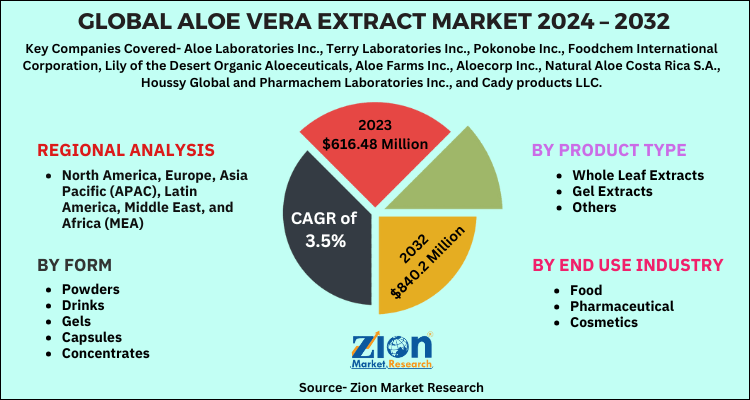
The global Aloe Vera Extract Market is currently witnessing a transformative phase, driven by a paradigm shift in consumer behavior toward natural, plant-based, and “clean label” products. Once relegated to traditional medicine and home remedies, Aloe Vera has evolved into a multi-billion dollar industrial powerhouse. As of 2024, the market is valued at approximately USD 2.8 billion, with projections indicating a robust climb to USD 6.4 billion by 2032. This trajectory represents a Compound Annual Growth Rate (CAGR) of roughly 8.1% over the forecast period.
Market Overview and Size
The versatility of Aloe Vera—derived from the succulent leaves of the Aloe barbadensis Miller plant—is its greatest market asset. Rich in over 75 potentially active constituents including vitamins, enzymes, minerals, sugars, lignin, saponins, salicylic acids, and amino acids, it serves three massive industries: Cosmetics, Food & Beverage, and Pharmaceuticals.
The demand is no longer just regional. While the Asia-Pacific region remains the largest producer and consumer, North American and European markets are seeing a surge in “premiumized” aloe products, ranging from organic skincare to functional health shots.
Market Segmentation Analysis
To understand the complexity of the Aloe Vera extract market, it is essential to break it down by product form, application, and distribution channel.
By Product Form
| Form | Market Share (2024) | Growth Outlook |
| Liquid | ~64% | Dominates due to ease of use in beverages and large-scale cosmetic formulations. |
| Gel | ~20% | High demand in the topical skincare and wound care sectors. |
| Powder | ~10% | Preferred for long shelf life and ease of transport in global supply chains. |
| Capsules/Tablets | ~6% | Fastest-growing segment in the nutraceutical space for internal health. |
By Application
- Cosmetics & Personal Care: This is the largest segment, holding over 43% of the total market share. Aloe is a staple in sunscreens, moisturizers, and anti-aging creams due to its hydrating and collagen-stimulating properties.
- Food & Beverages: Increasingly, aloe is found in functional waters, juices, and “detox” drinks. The trend toward sugar-free, plant-based hydration is a primary driver here.
- Pharmaceuticals: Aloe is utilized for its anti-inflammatory and antibacterial properties in dermatological ointments and gastrointestinal supplements.
Key Growth Drivers
Several factors are propelling the Aloe Vera extract market toward its 2032 targets:
- The “Clean Beauty” Movement: Consumers are scrutinizing ingredient lists more than ever. Aloe Vera provides a “natural” halo that brands use to replace synthetic chemicals in skincare.
- Rising Gastrointestinal Health Awareness: There is a growing body of evidence supporting aloe’s role in aiding digestion and treating symptoms of IBS (Irritable Bowel Syndrome), leading to a surge in aloe-based dietary supplements.
- Advancements in Extraction Technology: New cold-press and “whole leaf” extraction methods are allowing manufacturers to retain higher concentrations of Acemannan, the key bioactive polysaccharide responsible for most of the plant’s health benefits.
- Expansion of E-commerce: The digital marketplace has made niche, organic, and high-purity aloe products accessible to a global audience, bypassing traditional retail barriers.
Regional Trends and Insights
Asia-Pacific: The Production Powerhouse
The Asia-Pacific region, particularly China, India, and Thailand, continues to dominate the market share. India’s market is growing at a rapid pace (CAGR of ~10%) due to the strong presence of Ayurvedic traditions and the rise of domestic giants like Patanjali and Himalaya.
Europe: The Premium Consumer
Europe holds a significant share, particularly in the demand for high-quality, organic-certified extracts. Countries like Germany and the UK are leading the charge in integrating aloe into high-end “nutricosmetics”—products designed to improve beauty from within.
North America: Innovation and R&D
The U.S. market is characterized by intense R&D. Recent FDA-approved studies into aloe’s effectiveness for chronic conditions like interstitial cystitis are opening new doors for pharmaceutical-grade aloe extracts, which command much higher price points than cosmetic-grade alternatives.
Competitive Landscape
The market is moderately fragmented, featuring a mix of vertically integrated giants and specialized extractors.
Key Players include:
- Forever Living Products International: A global leader that controls its entire supply chain from plantation to final product.
- Aloecorp Inc.: Known for high-purity, standardized ingredients supplied to the B2B market.
- Lily of the Desert: A major player in the retail health food sector.
- Terry Laboratories: Specializes in bulk aloe extracts for the cosmetic and pharmaceutical industries.
Recent trends show these companies are increasingly moving toward Sustainability Certifications (like IASC certification) to differentiate their products from lower-quality synthetic mimics.
Challenges and Constraints
Despite the optimistic forecast, the industry faces hurdles:
- Climate Dependency: Aloe is a hardy but climate-sensitive crop. Erratic weather patterns in major growing regions like Mexico and Texas can lead to supply volatility.
- High Production Costs: The labor-intensive nature of harvesting (usually done by hand to avoid damaging the leaves) and the need for immediate processing to prevent oxidation keep production costs high.
- Regulatory Scrutiny: Different regions have varying rules regarding the “aloin” content (a laxative compound) in aloe products, requiring sophisticated filtration processes that add to the cost.
Future Forecast 2032
By 2032, the market is expected to reach a value of USD 6.4 billion. We anticipate the following shifts:
- Bio-Pharmaceutical Integration: More “Active Pharmaceutical Ingredients” (APIs) will be derived from aloe as research into its antiviral and immune-modulating properties matures.
- Sustainability-First Packaging: Manufacturers will shift toward biodegradable packaging to align with the eco-friendly image of the aloe plant itself.
- Hyper-Personalization: AI-driven skincare brands will use aloe as a base for custom-mixed serums tailored to individual skin hydration levels.
Conclusion
The Aloe Vera Extract Market is positioned for steady, resilient growth through 2032. Its transition from a traditional remedy to a scientifically-backed functional ingredient is complete. While challenges like climate change and high processing costs remain, the sheer breadth of its applications ensures that Aloe Vera will remain a cornerstone of the global wellness and beauty economy.
Would you like me to create a detailed SWOT analysis or a deeper dive into the competitive strategies of the top 5 companies mentioned in this report?
Read our Regional Reports >>
https://www.zionmarketresearch.com/de/report/aloe-vera-extracts-market
https://www.zionmarketresearch.com/de/report/chemical-indicator-inks-market
https://www.zionmarketresearch.com/de/report/e-commerce-personalization-tools-market
https://www.zionmarketresearch.com/de/report/cybersecurity-training-services-market
https://www.zionmarketresearch.com/de/report/data-center-networking-market